

Return dispersion is a critical factor in active manager performance. Return dispersion is the range of returns for investments in an asset class.
—The Active Management Council, Investment Adviser Association
Despite decades of research showing that passive investing consistently outperforms active management, many individual investors continue to pay premium fees for actively managed funds. The evidence is clear: active management consistently underperforms passive strategies, whether markets are soaring or crashing. For example, S&P’s Persistence Scorecard has concluded: “Regardless of asset class or style focus, active management outperformance is typically relatively short-lived, with few funds consistently outranking their peers.” Despite this evidence, many investors continue choosing active funds, prioritizing the possibility of outperformance over the probability of success.
Last year presented active managers with ideal conditions to demonstrate their value. The S&P 500 returned 17.9%, but individual stock performance varied wildly—creating exactly the kind of environment where skilled stock pickers should theoretically shine.
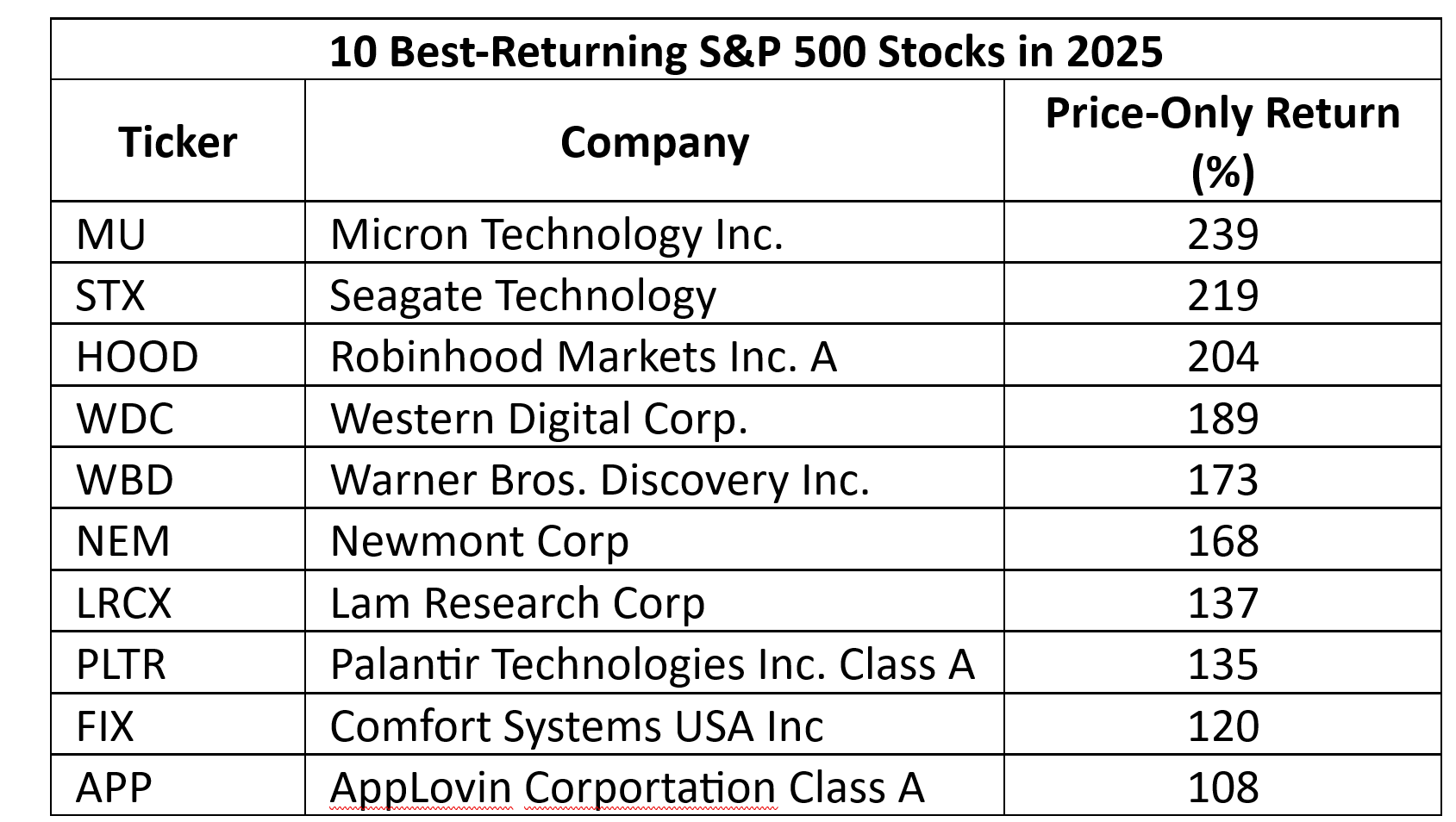
For example, while the S&P 500 2025 total return was 17.9%, the stocks of the 10 best performing companies were up at least 108%. This 90+ percentage point spread created ample opportunity for skilled stock selection—simply overweight these stocks.
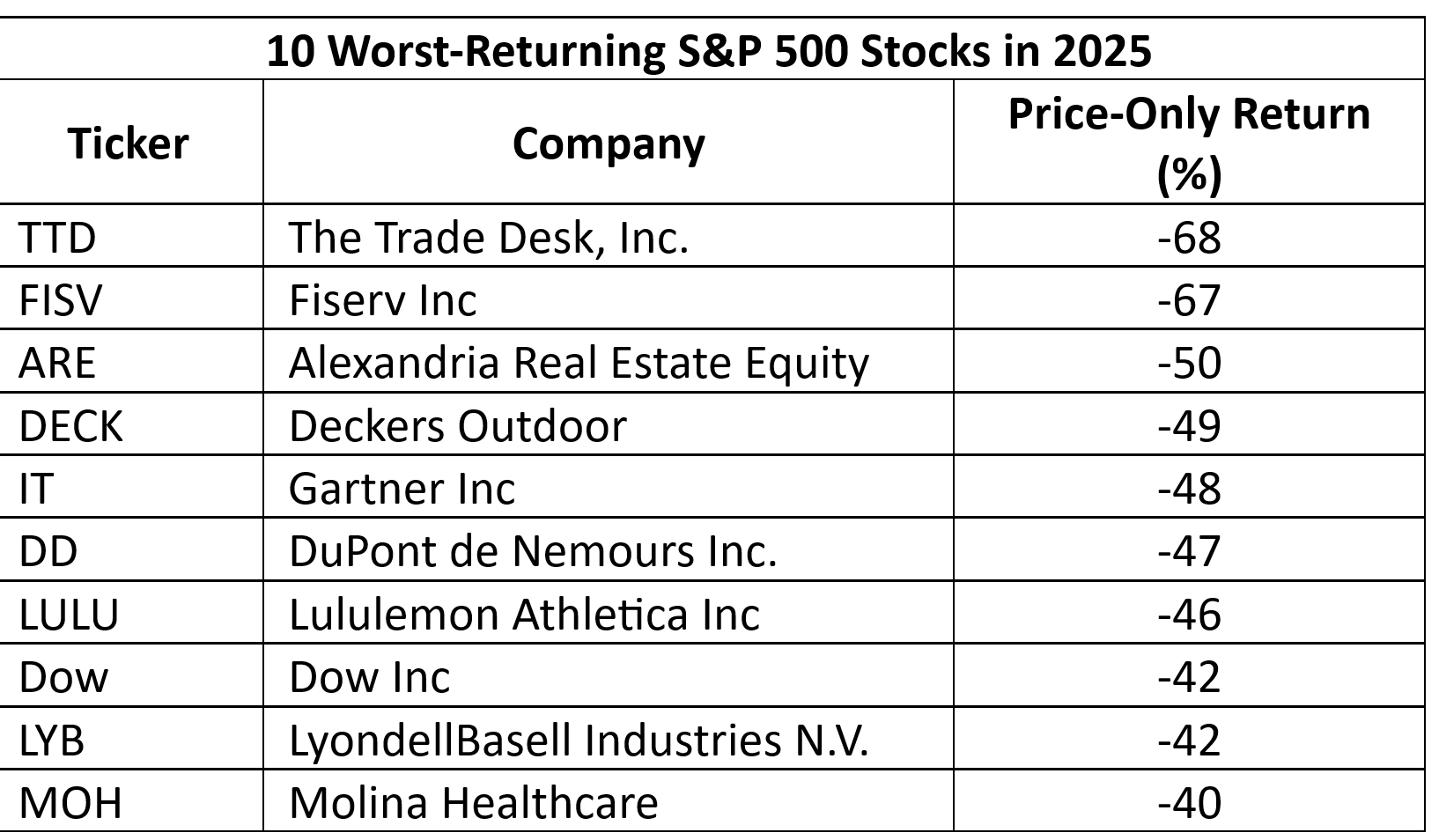
On the other hand, 10 stocks lost at least 40% (underperforming the S&P 500 Index by 18 percentage points), with the worst performer losing 68%. These stocks underperformed the index by 58 to 86 percentage points. This wide dispersion of returns is not at all unusual. Yet despite these obvious opportunities, active managers as a group once again failed to outperform low-cost index funds—as they do persistently, year after year.
Because indexes don’t incur expenses, while funds do, we need to compare the performance of active funds to those of actual index and systematic funds.
The Long-Term Verdict: Active Fails
The following table provides the percentile performance rankings of index funds from Vanguard and systematic funds from Dimensional for 2025 and the 15-year period ending in 2025. The results are striking.

The data shows that the longer the horizon, the better Vanguard’s and Dimensional’s funds ranked. At the 15-year horizon their funds ranked in the 25th and 24th percentiles, meaning these low-cost funds beat 75-76% of actively managed competitors. Even more significant: these rankings suffer from survivorship bias—about 7% of actively managed funds disappear every year and their poor returns vanish with them. Thus, over the long term the performance of active managers was actually far worse than the above rankings show.
Investor Takeaway
Year after year, active managers promise that “next year will be different.” They consistently predict that the coming year will be a “stock picker’s market”—a prediction that virtually never has come true.
The reality is that active management is “fraught with opportunity.” The opportunities are there, but the costs, behavioral biases, and difficulty of consistently identifying winners and avoiding losers make active management a poor choice.
The Bottom Line
Whether markets are bullish or bearish, calm or volatile, or return dispersion is narrow or wide, the evidence remains overwhelming: “passive” investing through low-cost index funds or systematic strategies gives investors the best chance of achieving their financial goals. The data from 2025—a year practically designed for active managers to succeed—only reinforces this truth.
Stop paying for hope. Start investing with evidence.
Larry Swedroe is the author or co-author of 18 books on investing, including his latest Enrich Your Future. He is also a consultant to RIAs as an educator on investment strategies.