
Are CLO BB Notes Misrated? Demystifying the Junior Tranche

When investors look at the world of structured credit, Collateralized Loan Obligations (CLOs) are often viewed as a complex web of risk and reward. At the bottom of the debt stack sit the BB-rated notes—traditionally labeled as the “junior-most” debt tranche, resting just above the high-risk equity portion.
Because of their placement, these notes carry a speculative-grade rating. But a June 2026 paper by Shiloh Bates, chief investment officer of Flat Rock Global, digs into the structure of CLO BB notes and asks the question: Are rating agencies getting it wrong? Let’s look at what the paper reveals, the structural protections at play, and what this means for yield-seeking investors.
Structure of BB Notes
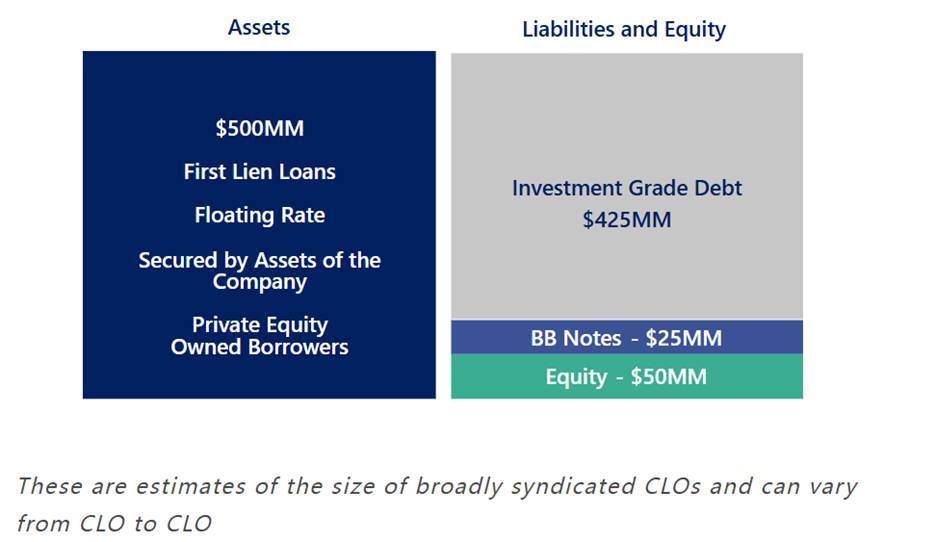
A typical CLO bundles together pools of first lien loans which are financed by issuing a series of debt notes (ranging in credit rating from AAA to BB) as well as an equity tranche that will absorb the first losses on the loans.
What the Examination Looked At
Bates focused on the perceived versus actual risk of CLO BB notes. Nationally Recognized Statistical Rating Organizations (NRSROs) determine CLO debt ratings by examining:
The underlying credit quality of the portfolio’s leveraged loans.
Historical recovery rates in default scenarios.
The correlation of defaults across the loan portfolio.
However, a rating is just a label. The examination sought to evaluate how CLO BB notes actually behave during market stress compared to standard corporate bonds with the same BB rating.
Key Findings: Structurally Protected, Historically Resilient
The study highlights that CLO BB notes behave much closer to investment-grade debt than high-yield corporate bonds. This boils down to several key structural advantages:
1. Built-In “Self-Healing” Protection
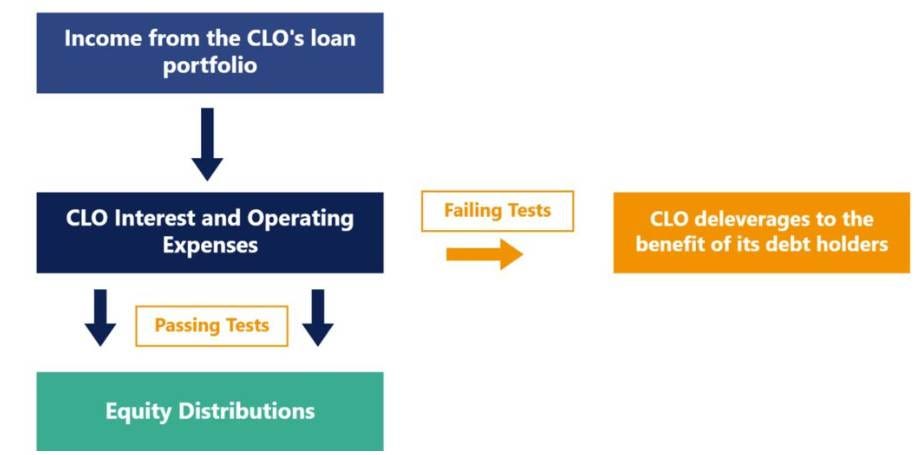
The CLO structure contains a self-correcting mechanism designed to protect debt investors:
Loss Absorption: When underlying loans default, the losses are first absorbed entirely by the equity tranche before ever reaching the BB notes.
De-leveraging: If the underlying portfolio underperforms, the CLO automatically redirects cash flows (stopping dividend payments to equity holders) to pay down the senior debt, which actively deleverages the BB notes and strengthens their coverage.
2. Diversification and Defensiveness
A standard BB corporate bond exposes you to the operational and financial risks of a single company. The same is true of direct private credit loans held by BDCs and interval funds. Conversely, a CLO BB note is backed by a highly diversified pool of senior-secured, first-lien loans. The pools typically have 75 or more distinct borrowers and are diversified by industry with typical maximum industry exposure at 10-15%.
3. De Minimis Historical Defaults
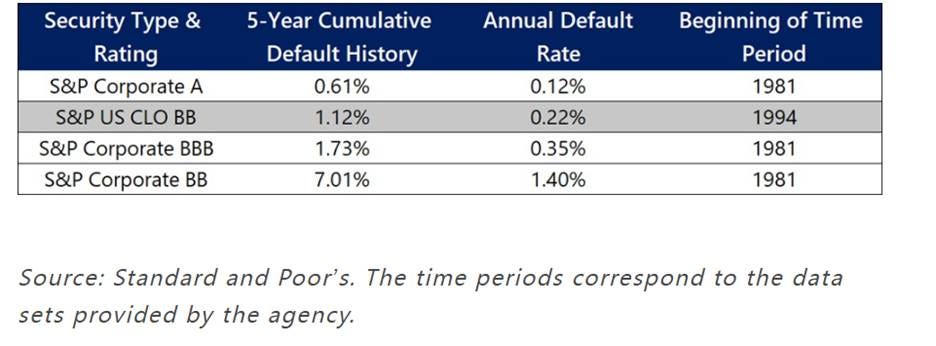
Despite being labeled “speculative,” the actual default rate for CLO BB notes has historically been exceptionally low (0.22% versus 3.8% for high yield bonds, and 2.75% for leveraged loans). The reality then is that a massive, systemic wave of corporate failures has to occur before a BB note investor suffers a principal loss.
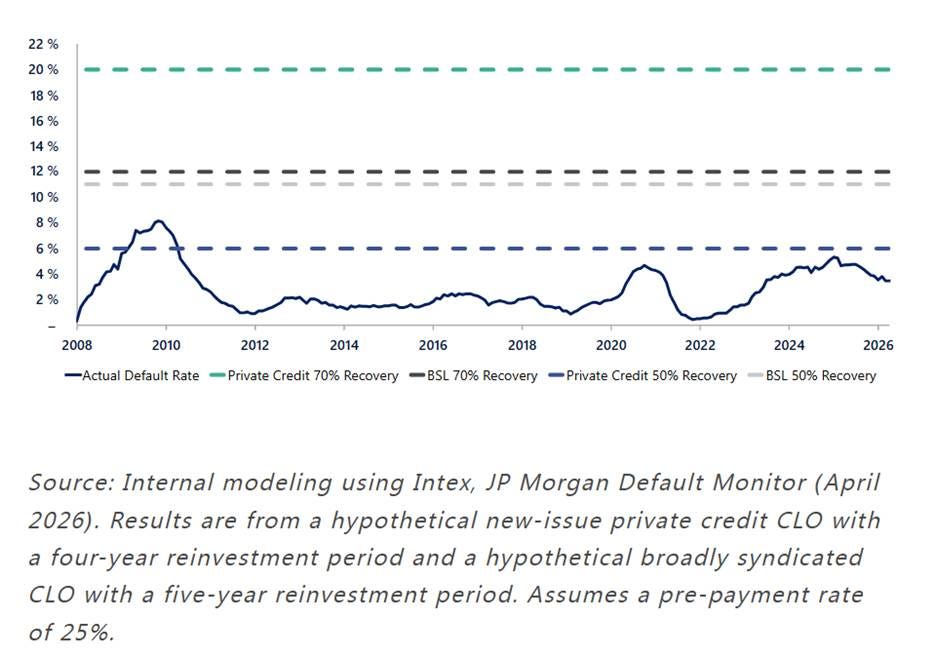
Bates then asked the most important question: What percent of the loans would need to default each year, such that the CLO BB noteholder does not receive all their contractual interest and principal? He explained that “CLOs are typically modeled with a 70% recovery rate assumption, with a downside case recovery rate of 50%.” He then analyzed the risks using those assumptions.
“Private credit CLO BBs begin their lives with 12% equity and are highly resilient to loan defaults. Assuming a 70% recovery rate, private credit CLO BBs would survive 2.5x the default rate of the Great Financial Crisis and could withstand that elevated default rate for a duration of eight years. For a broadly syndicated CLO BB with initial equity of 8%, the default rate required to impair the CLO BB falls to 12%. Lower projected loan recoveries result in lower required loan default rates for CLO BB impairment. However, even at a 50% recovery rate, CLO BBs can withstand substantial defaults.”
The solid blue line in the graph below shows the actual default rate for the loan market, which peaked at 8% during the GFC. The dashed horizontal lines show the annual default rate required for the CLO BB to miss any contractual payments, assuming various recovery rates on the defaulted loans.
Key Investor Takeaways
Keep reading with a 7-day free trial
Subscribe to Larry’s Substack to keep reading this post and get 7 days of free access to the full post archives.